
Discover PR6 Postman’s Path, the Caminho do Carteiro in Rio de Frades, Arouca.
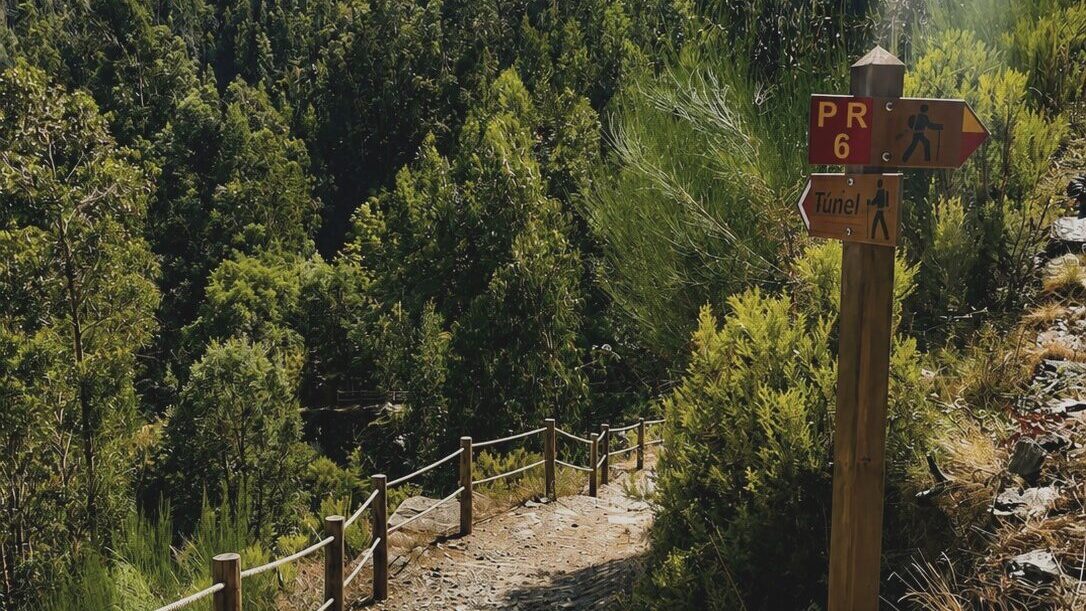
Some paths are made for walking.
You choose them because you want to be there. You wait for a clear morning, put on your boots, fill a bottle with water and set off into the mountains. The climb is part of the pleasure. The distance is something to be enjoyed.
Other paths are walked because they have to be.
Because there is work waiting in the next village. Because something needs to be delivered. Because someone is expecting you to arrive.
The Caminho do Carteiro – the Postman’s Path – was one of those paths.
High in the mountains of Arouca, the route connects Rio de Frades, Cabreiros and Tebilhão. It was once the route taken by the local postman to carry correspondence between the three villages. The story belongs to an era when these communities were still heavily dependent on footpaths for communication – particularly around the mid-20th-century mining period – although we don’t yet know exactly when his service began or ended. The Arouca Geopark records that the route was walked daily by the postman, including during the height of the tungsten-mining period of the Second World War.
Today, the route remains. Follow it from village to village and the distance begins to feel different – the climbs, the turns, the changing views and the communities waiting beyond the mountain. Walking it, you can begin to imagine what it meant to make this journey day after day, as part of an ordinary working life.
The Postman’s Path begins in Rio de Frades, tucked into a narrow valley in the mountains of Arouca. The houses gather close to the river, while above them the slopes rise steeply on either side.
From the village, the route gradually leaves the houses behind and begins its ascent towards Cabreiros. The sound of the river fades, the valley opens below, and the landscape becomes increasingly wild. Small streams appear along the way, while the sound of the river below slowly fades. This is one of those places where the landscape reveals itself slowly.
One can only imagine how familiar this path would have become to someone who walked it every day, knowing each turn and each rise, and noticing the smallest changes with the passing seasons.
As you continue towards Cabreiros, the journey slowly shifts its view. Beyond the slopes, the terraces of Tebilhão begin to appear in the distance. The valley is left further behind, and the route moves through old cultivated land, stone walls and terraces – traces of generations who worked with the hard mountain terrain, patiently shaping it to make a life here.
This is where the character of the Postman’s Path becomes most apparent. This was a landscape shaped slowly by the people who lived and worked here – cultivating the slopes, building terraces and finding ways to move between scattered mountain communities. The postman was one of those who made that journey, day after day, through a terrain that demanded something of everyone who lived here.
A legacy written into the landscape
The postman’s journey is part of what gives PR6 its name, but the path gives that story something more lasting. His work was ordinary: a journey that had to be made, repeatedly, through a landscape that offered few easy routes. Yet the memory of that journey has endured in the name the trail still carries today.
There is something quietly remarkable about that. No monument marks where he walked, and his name may be lost to time. Instead, the route itself remains – a lasting trace of a working life that once passed through these mountains, a route once walked out of necessity that is now open to anyone who wishes to follow it, whether to discover more of the world beyond or perhaps a little more of what lies within.
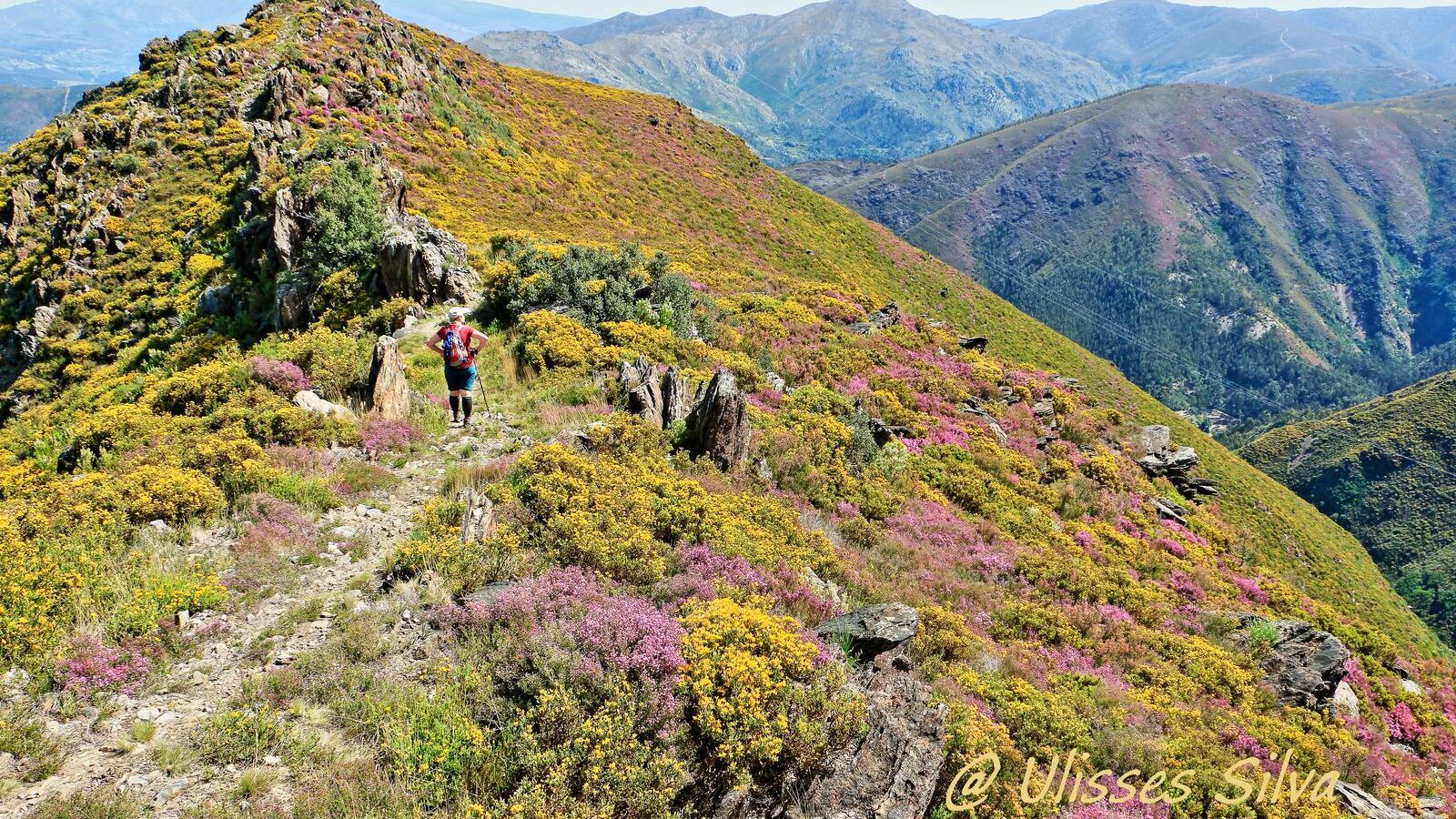
Walking the PR6 Postman’s Path Today
Today, PR6 Postman’s Path is a hiking route through the Arouca Geopark, connecting Rio de Frades, Cabreiros and Tebilhão. The old route has been marked and mapped, allowing walkers to follow the mountain paths between the three villages.
The most special thing about this trail is that, today, choosing to walk it says something about what brings each person here. Maybe it is the chance to discover something new, to challenge yourself, to breathe more deeply, or simply to gain some perspective. Whatever brings you here, once you start walking, the trail asks very little of you: simply to follow it at your own pace and trust it to lead you somewhere worth discovering.
That may be the real gift of the Postman’s Path – the reminder that reaching the destination takes focus and willingness to keep putting one foot in front of the other. But perhaps the real lesson revealed while walking the Postman’s Path is that getting where you want to go – and having the strength to keep going – often depends on knowing when to stop: to notice where you are, appreciate how far you’ve come, take a deep breath, and carry on.
Before you set off
PR6 Postman’s Path
– at a glance
- Distance: 7 km
- Type: Linear
- Walking time: Around 4 hours one way
- Difficulty: High
- Start: Rio de Frades or Tebilhão
- Highest point: 815 m
- Recommended for: Experienced walkers and older children or teenagers comfortable with steep mountain terrain
- Dogs: Possible for fit, sure-footed dogs accustomed to mountain walks
- You’ll discover: Rio de Frades, Cabreiros, Tebilhão, mountain paths, streams, terraces and traces of the area’s mining history
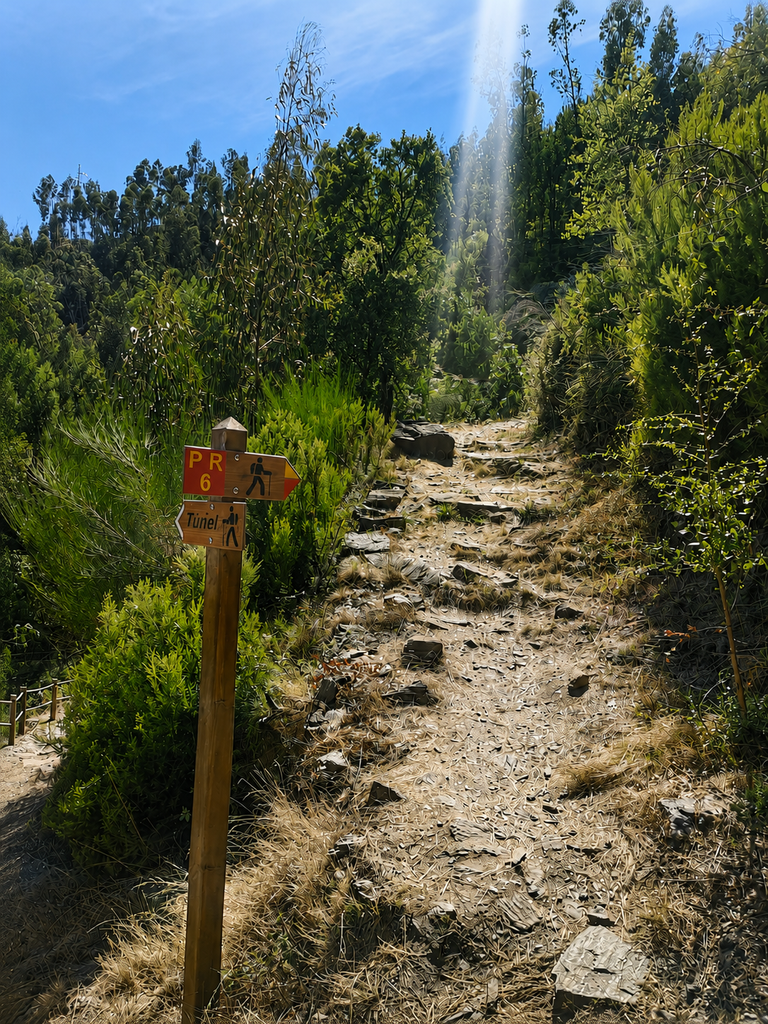
Planning your walk
The Postman’s Path is not a route to rush.
Although the official walking time is around four hours, allow longer if you want to stop, take photographs, explore the villages or simply sit for a while and enjoy the mountain landscape.
We recommend setting out in the morning. Start early, take your time on the climb from Rio de Frades and you can arrive towards Tebilhão around lunchtime. There are no reliable places to eat along the trail, so bring something with you or arrange lunch in advance.
The route can be walked throughout the year, but the character of the walk changes with the weather. The wetter months bring more water to the streams and a different atmosphere to the mountains, but they also make sections of the route considerably more slippery. Smooth stone and shaded areas can remain wet long after rainfall. If you choose to walk after a period of rain, allow extra time and take particular care. The official Arouca Geopark information for PR6 Postman’s Path provides the current route details before you set out.
In summer, an early start also means tackling the more exposed sections before the strongest heat of the day. In winter, starting early gives you a generous margin before darkness falls.
The route is linear, not circular. If you walk from Rio de Frades to Tebilhão, the walk takes around 4 hours one way. Unless you have arranged transport from Tebilhão, you will need to walk the same route back – making it around 8 hours of walking in total.
Proper hiking shoes or boots with good grip are strongly recommended, particularly after rain.
Bring plenty of water, food, sun protection and a waterproof or windproof layer if walking the trail during the rainy season. A phone with an offline map or the route track is also useful.
Dogs can accompany experienced walkers, but this isn’t an easy trail for a dog. The steep and sometimes uneven terrain means it is best suited to fit, sure-footed dogs accustomed to mountain walks.
For families, we would think of PR6 as a walk for older children and teenagers who are already comfortable with demanding mountain walks, rather than a route for young children. For a shorter outing, the Mine and Rio de Frades Waterfall is a much more accessible option and can be enjoyed with children and dogs, although care is needed around the water, uneven ground, and the mine tunnel.
As always, this is only a guide, and we hope it gives you the information you need to set off well prepared and make the most of your walk. The rest is yours to discover.
The PR6 Postman’s Path is only one of the stories written into these mountains. Beyond its old paths and villages lies another trail, following a very different trace of the past – one shaped by the people who came to Rio de Frades in search of what lay beneath the mountain.
That is the story of PR8, the Route of Black Gold.